"A disability or lack of knowledge of any kind does not prevent the conversion."
That line sits inside Maryland's ground rent statute, and it says something most guides to this topic skip past on their way to the redemption math: not knowing about a ground rent, or not understanding what it means, does not protect you from its deadlines. The law runs on its own clock whether you're watching it or not.
That distinction matters more than the dollar amount ever will. Most Baltimore City ground rents cost less per year than a cable bill, and most can be bought out permanently for a few thousand dollars. The number that actually stalls closings isn't the redemption price. It's whether anyone can tell you, on time, what category your specific ground rent falls into and whether the paperwork behind it was filed correctly and on schedule.
Why This Still Shows Up on Deeds in 2026
Ground rent split home ownership into two pieces: you own the structure, someone else technically owns the land beneath it, and you pay them a small annual fee to keep that arrangement in place. It's a leftover from a financing model that let 19th and early 20th century Baltimore buyers afford a house without also buying the ground it sat on.
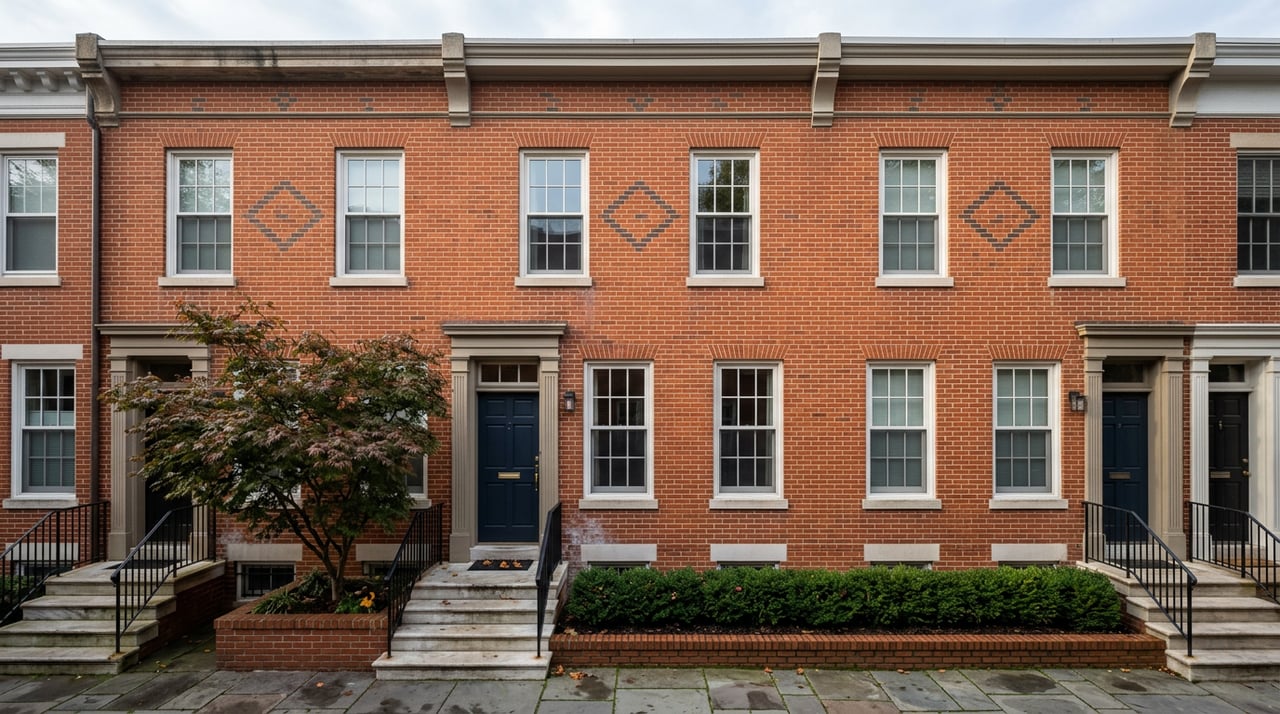
Maryland banned the creation of new residential ground leases in 2007, so nothing new is being written. But the leases already in place didn't disappear with that ban. Roughly 85,000 Maryland residential properties still carry active ground rents, and the bulk of that inventory sits in Baltimore City, concentrated in the dense rowhome blocks built between roughly 1890 and 1930. If you're looking at a rowhouse in Hampden, Remington, Waverly, Fells Point, Federal Hill, or Canton, ground rent is a real possibility on the title, not an edge case.
The Clock Nobody Explains Well
Here's where most explanations of Baltimore ground rent stop too early. They'll tell you ground rent is redeemable, cite a formula, and move on. But whether a given ground rent is redeemable at all depends on a sequence of statutory deadlines that ran for over a decade, and getting the sequence wrong is exactly how a title report turns into a closing delay.
| Date | What happened |
|---|---|
| Before April 9, 1884 | Ground rents created without a redemption clause could be classified as irredeemable |
| October 1, 2007 | Maryland's Ground Rent Registry law took effect; new ground leases banned |
| September 30, 2010 | Deadline for holders to register existing ground rents with the state |
| December 31, 2010 | Deadline for irredeemable ground rent holders to file a notice preserving that status |
| January 1, 2011 to December 31, 2020 | Preservation window for properly noticed irredeemable ground rents |
| April 1, 2023 | Final deadline for holders to renew that preservation; missed renewals convert automatically to redeemable |
If a ground rent was never registered by that 2010 deadline, the holder's interest was extinguished by law, meaning they can't collect back rent or sue over it. If it was labeled irredeemable but the holder missed the 2023 renewal window, it converted to redeemable at a set formula, the annual rent multiplied by 16.66. Either way, the fact that a title abstract shows "ground rent" tells you almost nothing on its own. It tells you there's a lookup to do.
What Actually Stalls a Closing
This is the part that catches sellers of older rowhouses off guard most often. They assume a ground rent noted decades ago in the land records is still a live obligation, and sometimes it is, but sometimes the registration lapsed or was never filed, and there's legally nothing left to redeem. The opposite mistake happens too: a buyer assumes an old, small annual payment means the issue is trivial, then discovers the holder can't be located, or the extinguishment certificate from an earlier owner's unregistered lease was never recorded in the land records, which means the title still shows the old arrangement even though no rent is technically owed.
None of this is expensive to fix. It's slow to fix if nobody starts early. A title company can flag a ground rent, but not every lender or title company handles Baltimore's ground rent history the same way, and confirming registration status, tracking down a holder, or requesting a Certificate of Redemption from the state all take real calendar time, not legal complexity.
The Math, When There's Something to Redeem
When a ground rent is confirmed active and registered, the fix is usually straightforward. Maryland fixes the buyout price using a capitalization formula tied to the annual rent and the year the lease was created. In practice, a $96 per year ground rent typically redeems for somewhere around $1,200 to $1,500. A $150 per year ground rent runs closer to $1,800 to $2,200. Most Baltimore ground rent redemptions land in the $1,000 to $3,000 range, and the state simplified the redemption application process in 2022 to cut down on the paperwork involved.
Homeowners who can't cover that cost out of pocket have an option: Maryland's Department of Housing and Community Development runs a Ground Rent Redemption Loan Program, an interest-free loan for owners who occupy the property as their primary residence, are current on any ground rent payments, and fall at or below 80 percent of the statewide median income. The tradeoff is a lien recorded against the property for the loan amount, so it's worth weighing against simply paying redemption directly if the numbers allow it.
Unregistered leases, on the other hand, cost nothing to resolve because there's nothing left to buy. The only expense is confirming that status and getting the right certificate recorded so the next lender or title company doesn't reopen the question.
A New Registry Is Coming for the Trickiest Cases
The irredeemable ground rent category, the ones tied to leases predating 1884, generated enough confusion through that 2010 to 2023 deadline chain that Maryland lawmakers took notice. During the 2026 legislative session, House Bill 91 was introduced to create a dedicated online registry maintained by the State Department of Assessments and Taxation, specifically listing which properties carry irredeemable ground leases and when each one's preservation notice expires. Whatever its ultimate fate, the bill itself is a useful signal: the state recognized that tracking a decade-plus of filing deadlines by hand was producing exactly the kind of title uncertainty that surfaces late in a sale.
What This Means If You're Buying or Selling This Fall
If you're preparing to list a Baltimore City rowhouse built before 1930, or you're under contract on one, treat the ground rent question as a week-one task, not a closing-week surprise.
- Search the property address in Maryland's SDAT Real Property system and check the ground rent registration status before you list or make an offer
- If a ground rent is active and registered, request the instrument and any assignments from your title company early, so there's time to contact the holder about redemption if you want a clean fee simple title before closing
- If a ground rent appears unregistered or shows as extinguished, confirm whether a Certificate of Extinguishment was actually recorded in the land records, not just issued
- Build a week or two of contingency time into the contract for locating a holder or requesting state documentation, since this step depends on mail and processing time, not negotiation
None of this should be a reason to walk away from a rowhouse you love. It's a reason to ask the registration question before the inspection contingency runs out.
A Few Questions Worth Settling Before Settlement
Does having a ground rent mean I don't fully own my home? No. You own the structure outright. The ground rent holder's only right is to collect the annual payment, not to occupy or reclaim the property, as long as payments stay current.
Can I still get a mortgage on a property with ground rent? Generally yes. Conventional and FHA loans can finance ground rent properties, though some lenders are less familiar with Baltimore's leasehold structure and may ask for extra documentation. Working with a lender who regularly closes Baltimore City transactions helps avoid delays.
What if the ground rent holder can't be found? Maryland's redemption program has a path for this, allowing owners to redeem through the state when there has been no communication from a holder for three years. It takes longer than a direct redemption, so it's worth starting as soon as you know the holder is unreachable rather than waiting until closing week.
Ground rent is one of Baltimore's oldest quirks, and it rewards the same thing every part of a real estate transaction rewards: starting the paperwork early. If you're weighing a purchase or a listing in one of Baltimore's rowhome neighborhoods and want a second set of eyes on a title report before it becomes a scramble, the team at DCARealtors has spent years working through exactly this kind of local detail with clients across the DMV. Contact us and let's map out the timeline before it becomes an issue.